 Team
Introduction
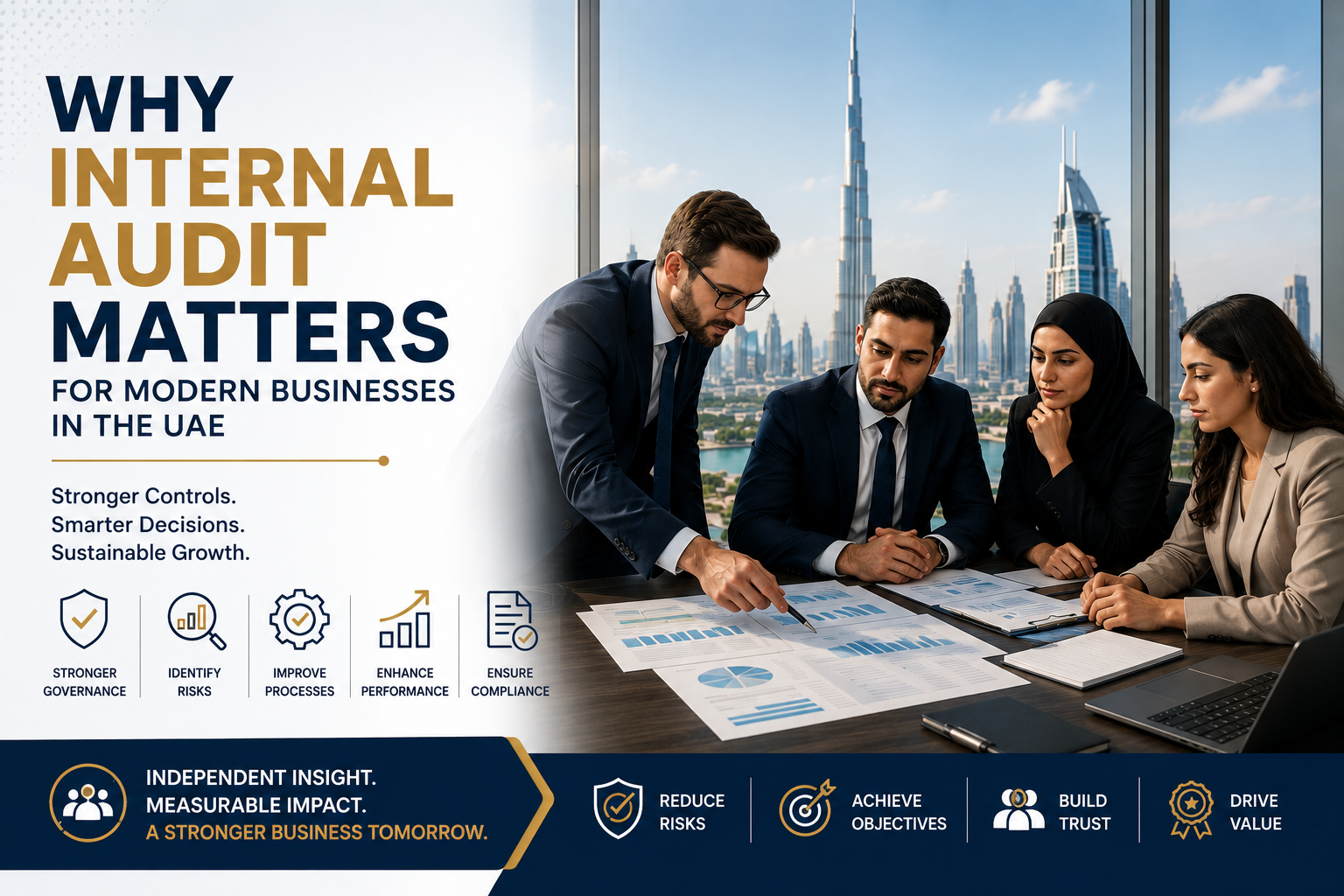
As businesses grow, their operations become more complex. More employees, larger transaction volumes, multiple locations, technology systems, suppliers and regulatory requirements can create new areas of risk.
This is where internal audit becomes an important component of effective governance.
Internal audit is not simply about checking whether financial records are accurate. A well-designed internal audit function provides an independent and structured assessment of processes, controls, risk management and governance.
For UAE businesses, internal audit can help management identify weaknesses before they become significant issues while providing leadership with greater visibility over how the organization operates.
What Is Internal Audit?
Internal audit is an independent and objective activity designed to evaluate and improve an organization’s governance, risk management and control processes.
Unlike an external financial audit, which primarily provides an opinion on financial statements, internal audit can examine a much broader range of business activities.
This may include:
- Financial processes
- Procurement
- Sales
- Inventory
- Human resources
- IT systems
- Cybersecurity controls
- Compliance
- Risk management
- Business continuity
- Operational processes
The objective is to provide management and relevant stakeholders with useful insight into whether important risks are being appropriately managed.
Why Do Businesses Need Internal Audit?
1. Stronger Internal Controls
Internal audit can identify weaknesses in approval processes, segregation of duties, access controls, reconciliations and other important controls.
Strong controls reduce the likelihood of errors, misuse and process failures.
2. Better Risk Management
Businesses face financial, operational, technological, regulatory and strategic risks.
Internal audit helps organizations assess whether important risks are properly identified and whether controls are addressing those risks effectively.
3. Improved Operational Efficiency
An audit can identify unnecessary steps, duplicated processes, manual work and inefficient workflows.
The objective is not simply to identify problems but to help management improve how work gets done.
4. Fraud Risk Identification
Internal audit can evaluate controls designed to prevent and detect fraudulent activity.
Where red flags or unusual patterns are identified, management can take appropriate action.
5. Better Governance
Effective governance requires reliable information, clear accountability and appropriate oversight.
Internal audit can provide management and boards with independent insight into the effectiveness of governance and control frameworks.
6. Regulatory & Compliance Support
Businesses operating in regulated or highly controlled environments need to understand whether their policies and procedures are being followed.
Internal audit can provide structured reviews of relevant compliance areas.
Internal Audit vs External Audit
These two functions are often confused.
External Audit
External audit primarily focuses on providing an independent opinion on financial statements in accordance with applicable auditing standards.
Internal Audit
Internal audit has a broader focus and may examine governance, risk management, operational processes, technology, compliance and internal controls.
The two functions can complement each other while serving different purposes.
What Does an Internal Audit Review Include?
A typical internal audit engagement may involve:
Risk Assessment
Identifying important business risks and prioritizing areas for review.
Audit Planning
Developing a risk-based audit plan aligned with business objectives.
Fieldwork
Reviewing processes, documentation, transactions, systems and controls.
Control Testing
Testing whether important controls are properly designed and operating effectively.
Findings & Recommendations
Documenting identified gaps and providing practical recommendations.
Reporting
Presenting findings and observations to management and relevant stakeholders.
Follow-Up
Tracking agreed corrective actions and assessing whether issues have been addressed.
When Should a Business Consider Outsourcing Internal Audit?
Not every organization needs to maintain a large internal audit department.
Outsourcing or co-sourcing may be appropriate when a business:
- Is establishing its internal audit function
- Needs specialist expertise
- Wants independent assurance
- Has limited internal resources
- Is expanding into new markets
- Needs support for a risk-based audit plan
- Requires temporary specialist resources
- Wants to strengthen its existing audit team
An outsourced model can provide access to experienced professionals while allowing the organization to scale support according to its needs.
Industries That Can Benefit
Internal audit can be valuable across a wide range of sectors, including:
- Financial Services
- Real Estate
- Manufacturing
- Healthcare
- Hospitality
- Retail
- Technology
- Construction
- Energy & Infrastructure
- Professional Services
The specific audit approach should always be tailored to the organization’s risk profile and operating environment.
How ORRBBIS Can Help
ORRBBIS provides Internal Audit Outsourcing & Co-Sourcing, Internal Controls & SOP Advisory, Audit Readiness, Compliance Audits and related assurance services.
Our approach focuses on understanding the organization’s risks, evaluating controls and providing practical recommendations that management can implement.
We aim to make internal audit a useful management tool—not simply a compliance exercise.
Conclusion
A strong internal audit function gives businesses greater visibility into their risks, controls and operations.
For growing organizations, the value of internal audit goes beyond identifying weaknesses. It can help management improve processes, strengthen governance, enhance risk management and make more informed decisions.
Effective internal audit is not about finding fault. It is about helping the business become stronger.
CTA: Strengthen Your Internal Audit Function