
 Team
Introduction
The introduction of Corporate Tax has significantly changed the UAE’s business tax environment. Companies operating in the country now need to consider Corporate Tax as part of their broader financial reporting, compliance and business-planning processes.
However, Corporate Tax compliance is not limited to calculating tax at the end of a financial year. Businesses need to understand their tax position, registration requirements, taxable income, applicable adjustments, documentation, filing obligations and ongoing compliance responsibilities.
A structured approach can help organizations identify potential issues early and integrate tax considerations into their financial and operational processes.
What Is UAE Corporate Tax?
UAE Corporate Tax is a federal tax imposed on the taxable income of businesses and other entities falling within the scope of the Corporate Tax legislation.
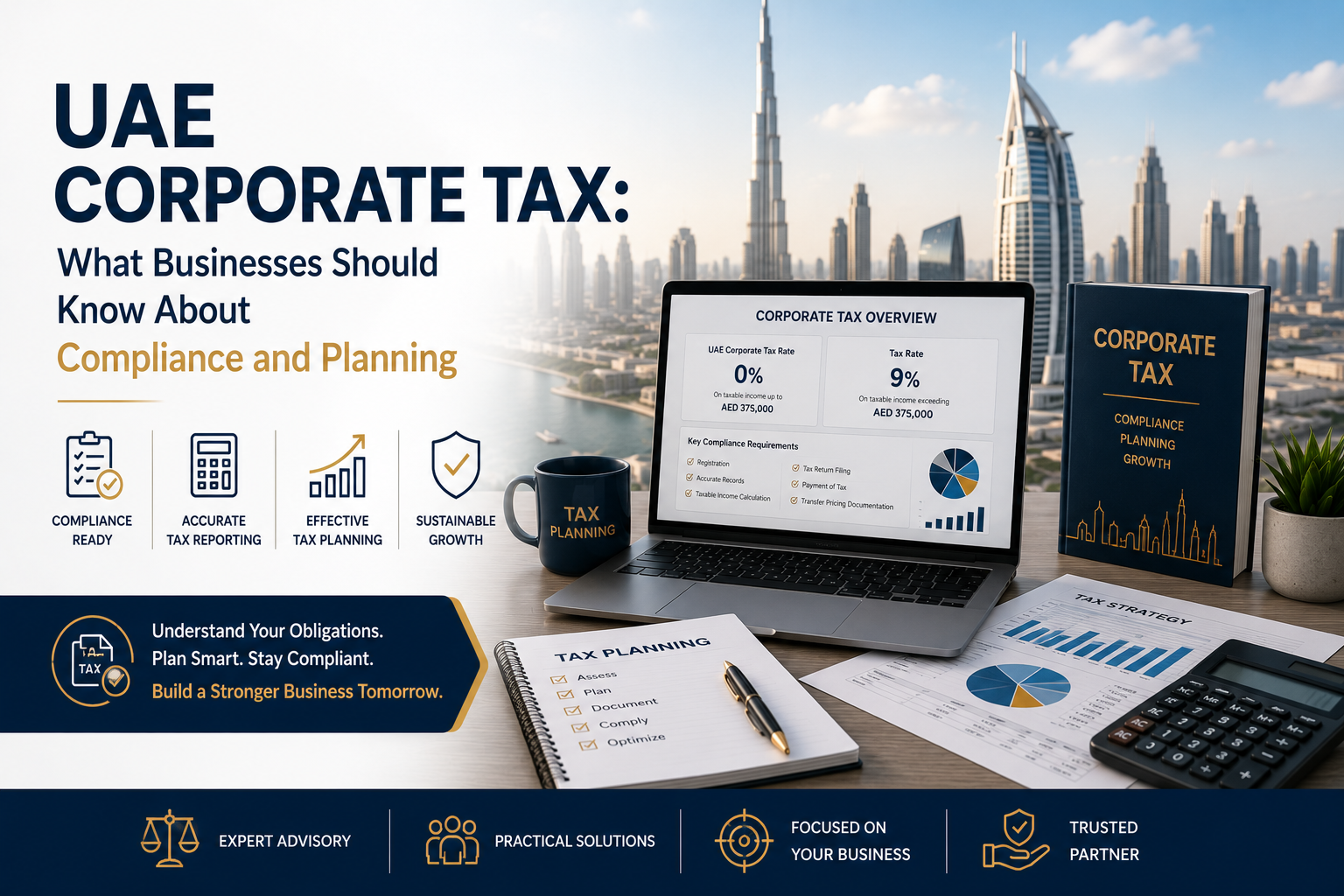
For taxable income up to and including AED 375,000, the applicable rate is 0%. Taxable income exceeding AED 375,000 is generally subject to a 9% rate, subject to the specific rules and provisions applicable to the taxpayer.
Certain entities and income categories may be subject to specific rules, exemptions or conditions, so businesses should assess their individual circumstances rather than relying on a general assumption.
Who Needs to Consider Corporate Tax?
Corporate Tax applies to businesses and other taxable persons falling within the scope of UAE Corporate Tax legislation.
The treatment can vary depending on factors such as:
- Legal structure
- Nature of business activity
- Source and type of income
- Free Zone status
- Exempt status
- Ownership structure
- Applicable elections or reliefs
- Related-party transactions
Businesses should therefore assess their specific circumstances and obligations.
Understanding Taxable Income
One of the important aspects of Corporate Tax is determining taxable income.
Businesses generally start with accounting income and then apply the relevant tax rules and adjustments.
This means finance teams need to maintain accurate accounting records and understand which items may require tax treatment adjustments.
Important considerations may include:
- Revenue recognition
- Deductible and non-deductible expenditure
- Depreciation and asset treatment
- Related-party transactions
- Interest expenses
- Exempt income
- Tax losses
- Free Zone considerations
- Transfer pricing requirements
The correct treatment depends on the applicable legislation and the facts of the business.
Corporate Tax Compliance
Corporate Tax compliance should be viewed as an ongoing process rather than a once-a-year exercise.
Businesses should establish appropriate processes for:
Tax Registration
Businesses should assess whether they are required to register and ensure registration obligations are addressed within the applicable timelines.
Record Keeping
Relevant accounting and supporting records should be maintained appropriately.
Tax Return Preparation
Businesses need to prepare and submit Corporate Tax returns in accordance with applicable requirements.
Tax Calculations
Taxable income should be calculated using the relevant Corporate Tax rules and adjustments.
Supporting Documentation
Businesses should maintain appropriate documentation supporting their tax position.
Ongoing Review
Tax positions should be reviewed when business activities, structures or regulations change.
Why Tax Planning Matters
Tax planning does not simply mean reducing tax.
Effective tax planning involves understanding how business decisions may affect the organization’s tax position while remaining compliant with applicable laws.
For example, businesses may need to consider tax implications when:
- Expanding into new markets
- Restructuring operations
- Establishing subsidiaries
- Entering related-party arrangements
- Acquiring businesses
- Selling assets
- Changing financing structures
- Establishing Free Zone operations
Early tax consideration can help management make better-informed commercial decisions.
Transfer Pricing Considerations
Businesses with transactions between related parties may need to consider UAE transfer pricing requirements.
These transactions can include:
- Management services
- Intercompany financing
- Intellectual property
- Goods and services
- Shared costs
- Related-party arrangements
Businesses should ensure that relevant transactions are appropriately documented and assessed in accordance with applicable requirements.
The Federal Tax Authority continues to publish and update Corporate Tax legislation and related guidance, making ongoing monitoring important for businesses.
Common Corporate Tax Challenges
Businesses may face challenges such as:
Poor Accounting Data
Inaccurate or incomplete accounting records can make tax calculations more difficult.
Lack of Tax Adjustments
Not all accounting treatments automatically translate directly into the Corporate Tax calculation.
Weak Documentation
Insufficient supporting documentation can make it difficult to substantiate tax positions.
Missed Compliance Requirements
Businesses need processes to track registration, filing and other relevant obligations.
Changing Regulations
Tax rules and guidance can evolve, requiring businesses to monitor developments.
How ORRBBIS Can Help
ORRBBIS provides Corporate Tax Registration, Corporate Tax Assessment, Tax Return Preparation & Filing, Corporate Tax Compliance Reviews, Tax Planning & Advisory and ongoing tax support.
Our approach combines tax knowledge with practical business understanding, helping organizations establish structured tax processes and address their Corporate Tax obligations with greater confidence.
Conclusion
Corporate Tax has become an important part of the UAE business landscape.
Businesses that approach tax compliance proactively can improve the quality of their financial information, identify potential risks earlier and make more informed decisions.
The objective should not simply be to file a tax return. It should be to build a structured, well-documented and sustainable tax compliance framework.
CTA: Speak With Our Corporate Tax Experts
This article is for general information only and should not be considered tax or legal advice. Corporate Tax treatment depends on the specific facts and circumstances of each business. Businesses should refer to the latest Federal Tax Authority and Ministry of Finance guidance.