
 Team
Introduction
The UAE is moving toward a more connected and digitally enabled tax environment, and electronic invoicing (e-invoicing) is an important part of this transformation. Rather than simply replacing paper invoices with digital documents, the UAE e-invoicing framework is designed to enable structured electronic invoice exchange and improve the efficiency, transparency and accuracy of business transactions.
For businesses operating in the UAE, preparation should go beyond selecting invoicing software. Organizations need to consider their accounting systems, ERP platforms, transaction processes, tax data, internal controls, suppliers, customers and overall technology environment.
With implementation taking place in phases, businesses should begin assessing their readiness well before their applicable deadline. The UAE Ministry of Finance has also issued official e-invoicing guidelines covering scope, technical requirements, readiness, governance, tax codes and implementation considerations.
What Is UAE E-Invoicing?
E-invoicing is the electronic exchange of structured invoice data between businesses through an approved framework. It is different from simply sending an invoice as a PDF through email.
The UAE framework is based on the OpenPeppol standard and uses a decentralized model involving Accredited Service Providers (ASPs). The system is intended to support efficient invoice exchange while enabling relevant invoice data to be transmitted to the Federal Tax Authority.
This means businesses may need to make changes to how invoices are created, transmitted, received, processed and stored.
UAE E-Invoicing Implementation Timeline
The UAE has adopted a phased implementation approach.
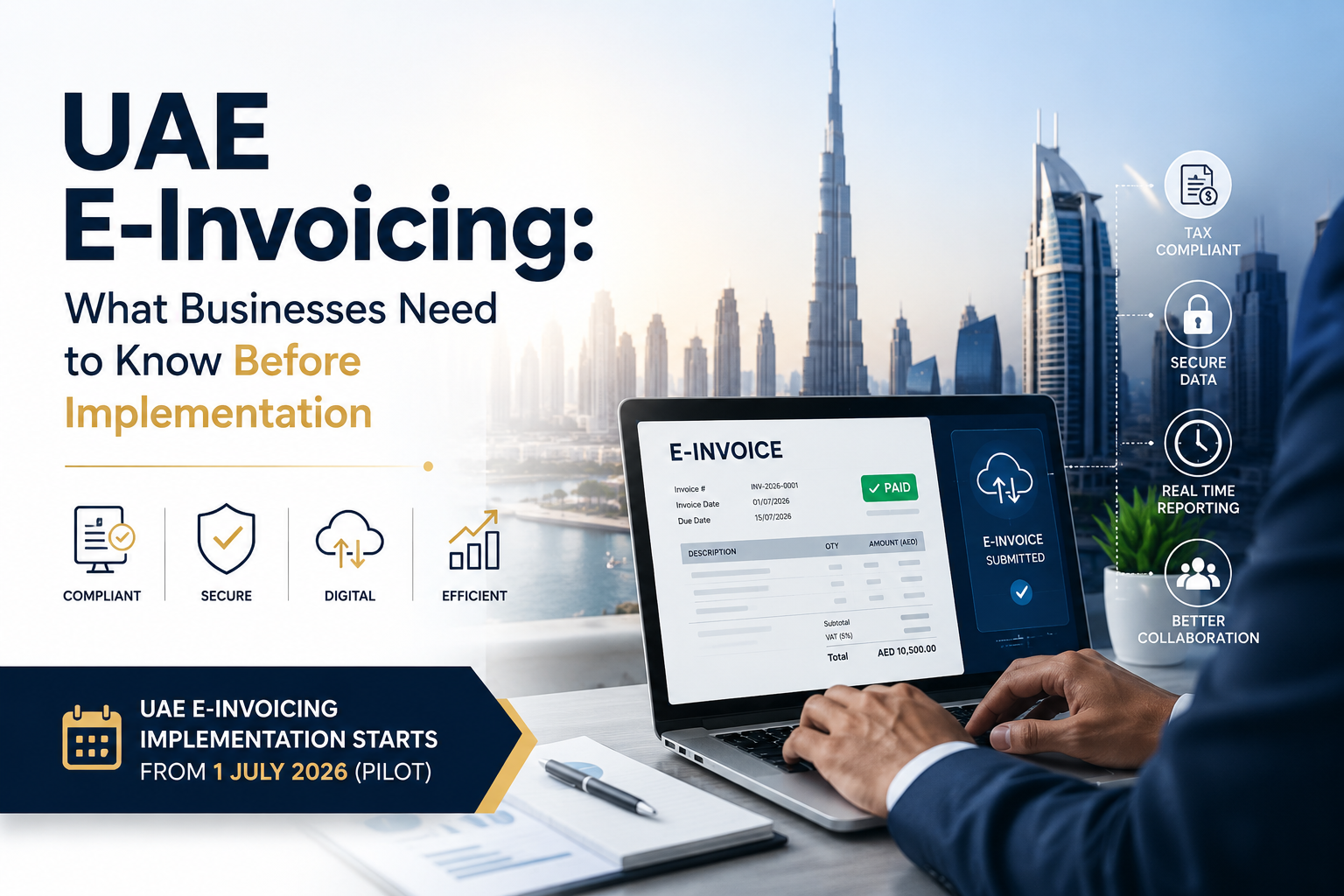
The pilot programme commenced on 1 July 2026, with selected participants. Businesses may also voluntarily implement e-invoicing from this date, subject to the applicable technical requirements.
For businesses with annual revenue of AED 50 million or more, the deadline to appoint an Accredited Service Provider has been extended to 30 October 2026, while mandatory implementation remains scheduled for 1 January 2027.
For businesses with annual revenue below AED 50 million, the current timeline provides for appointment of an Accredited Service Provider by 31 March 2027 and implementation by 1 July 2027.
The implementation timeline makes early preparation particularly important for organizations with complex accounting and ERP environments.
What Does E-Invoicing Mean for Businesses?
The transition can affect several areas of an organization.
1. Accounting Systems
Businesses need to assess whether their accounting or ERP system can support the required electronic invoicing processes and data structure.
2. Tax Data
Invoice information must be correctly structured and mapped to the relevant tax treatment. Incorrect tax codes or incomplete information can create compliance and reconciliation challenges.
3. Business Processes
Organizations should review how invoices are generated, approved, issued, received, recorded and reconciled.
4. ERP & Technology Integration
Businesses using ERP platforms may need integration between their existing systems and an Accredited Service Provider.
5. Internal Controls
E-invoicing should be incorporated into appropriate controls covering invoice creation, approvals, changes, credit notes, data validation and record retention.
6. People & Training
Finance, tax, IT and operational teams need to understand the new processes and their responsibilities.
How Can Businesses Prepare?
A structured readiness programme can help businesses move toward implementation with fewer disruptions.
Step 1: Assess Your Current Environment
Review your accounting systems, ERP platforms, invoicing processes, transaction volumes and tax workflows.
Step 2: Identify Gaps
Determine whether your current technology, data and processes can support the new requirements.
Step 3: Review Your Data
Clean and validate customer, supplier, product, tax and invoice information.
Step 4: Assess Technology Integration
Evaluate available Accredited Service Providers and determine the integration approach suitable for your systems.
Step 5: Strengthen Controls
Establish appropriate controls around invoice generation, validation, approvals, corrections and record keeping.
Step 6: Test Before Implementation
Conduct testing across different transaction scenarios before moving into production.
Benefits Beyond Compliance
Although compliance is a key driver, e-invoicing can also provide operational benefits.
Businesses may benefit from:
- Reduced manual invoice processing
- Fewer data-entry errors
- Faster invoice exchange
- Improved financial visibility
- Better transaction transparency
- More efficient reconciliation
- Stronger tax reporting processes
- Greater automation
The Ministry of Finance has highlighted efficiency, transparency, accuracy and reduced reliance on manual processes as important benefits of the UAE’s e-invoicing transformation.
How ORRBBIS Can Help
ORRBBIS supports businesses in preparing for digital tax transformation through a combination of Tax, Technology and Advisory expertise.
Our support can include e-invoicing readiness assessments, process reviews, tax-data assessment, ERP integration considerations, control reviews, implementation support and ongoing advisory.
Conclusion
UAE e-invoicing is more than an accounting-system upgrade. It represents a broader change in how businesses manage invoices, tax information, financial processes and transaction data.
Organizations that begin preparation early can identify technology and process gaps, establish appropriate controls and create a smoother transition toward mandatory implementation.
The right time to assess your e-invoicing readiness is before your deadline arrives.
CTA: Talk to ORRBBIS E-Invoicing Specialists
This article is for general information only and should not be considered legal or tax advice. Businesses should refer to the latest UAE Ministry of Finance and Federal Tax Authority requirements applicable to their circumstances.